
Frame Damage and Collision Repair: What Little Rock Drivers Need to Know
Little Rock, United States - February 2, 2026 / Bale Collision Center (Chenal) /
Little Rock, AR – After a collision, hearing “frame damage” often triggers fears that a vehicle is no longer safe or worth repairing. Bale Collision Center (Chenal), a trusted provider of auto collision repair in Chenal Parkway, Little Rock, AR, is helping drivers understand what frame damage actually means, how modern diagnostic tools work, and when certified repairs can fully restore vehicle integrity.

Understanding Structural Damage in Modern Vehicles
Structural Design and How It Affects Repairs
Understanding how vehicles are built is the first step in evaluating structural damage. Most passenger vehicles today use unibody construction, where the frame and body are integrated into a single structural shell. In contrast, larger trucks and some SUVs use body-on-frame construction, where the body is mounted to a separate steel chassis. Each design responds differently in a collision and requires specialized repair procedures.
Frame structures include rails, cross members, pillars, rocker panels, and suspension mounting points. Even minor collisions can shift these parts slightly, affecting the entire structural alignment. Misaligned components can compromise everything from crash protection to steering response if not properly addressed.
Frame Damage Varies in Severity
Frame damage can range from minor misalignment to severe structural compromise. A low-speed impact might only nudge a bumper support or shift a suspension point slightly. More serious collisions may bend the primary frame rails, distort multiple crumple zones, or displace ultra-high-strength steel components.
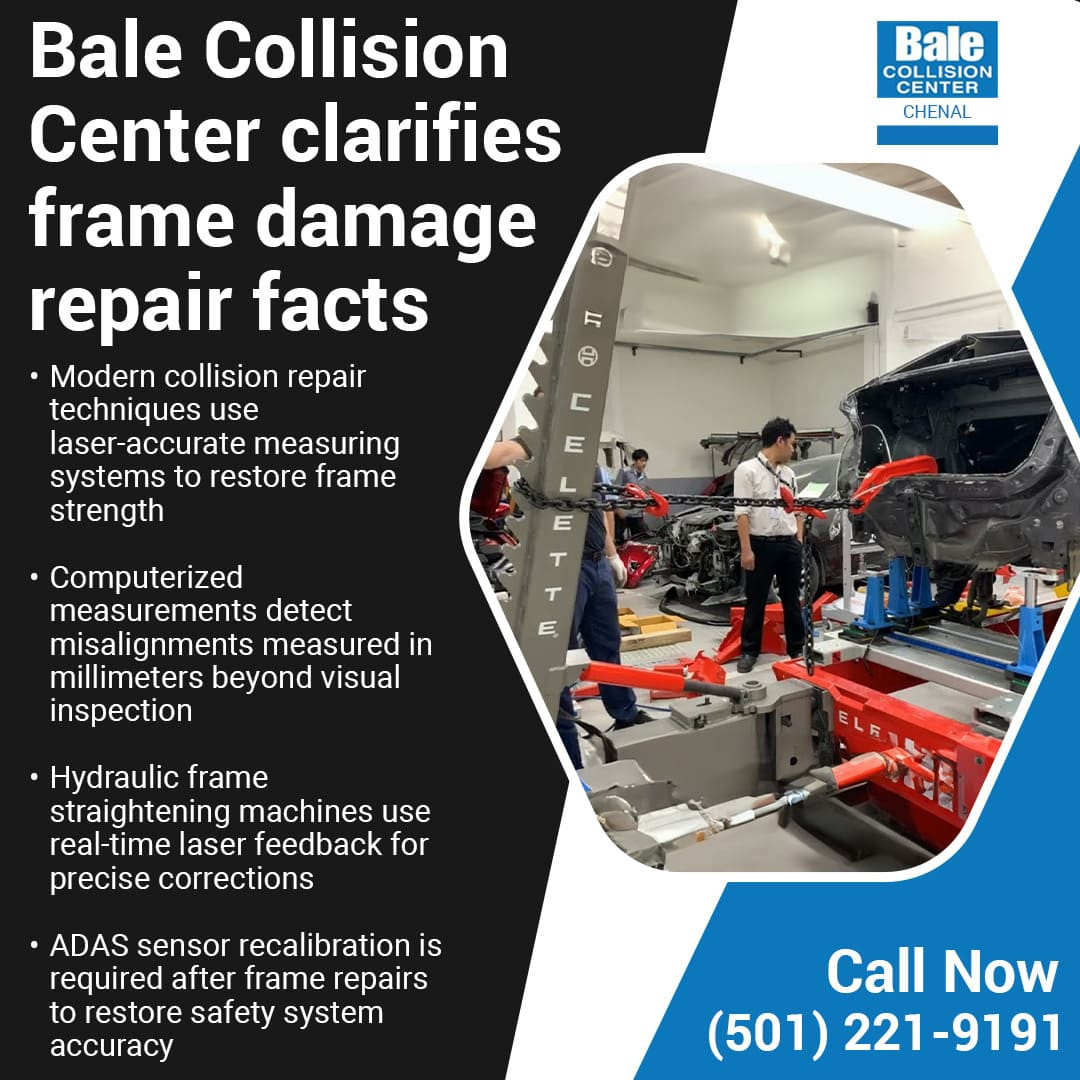
At Bale Collision Center, every structurally involved repair begins with computerized measurements. Technicians capture precise dimensional data and compare it against manufacturer specifications. This process detects misalignments measured in millimeters, far beyond what visual inspection can determine.
Common Misconceptions Around Frame Damage
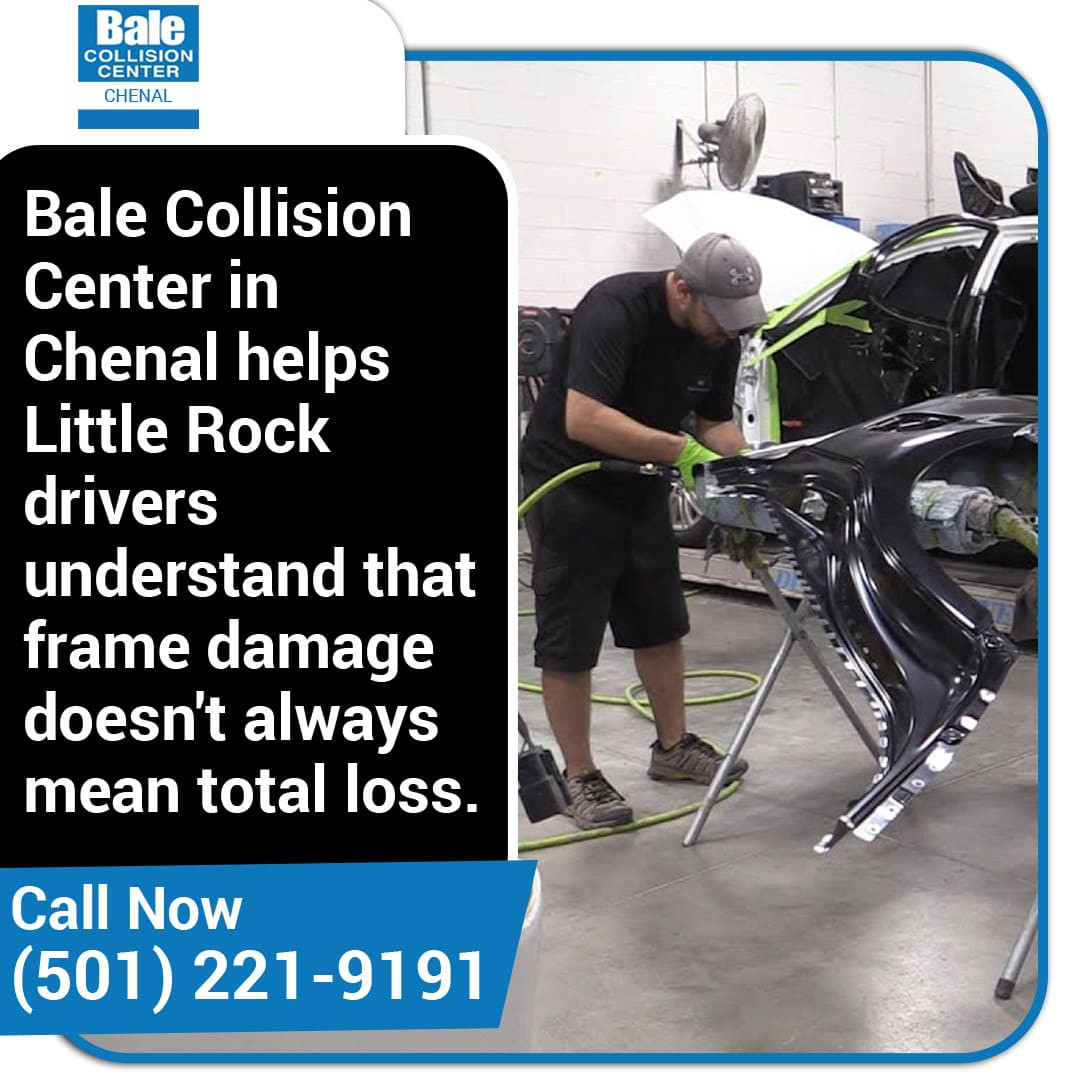
Many drivers believe that frame damage automatically means a vehicle must be totaled. In reality, insurance companies consider whether repairs are possible and cost-effective. If structural damage can be corrected following certified collision repair protocols, and the cost remains below the vehicle’s market value, it may not be considered a total loss.
Another common misconception is that repaired frames are permanently weaker. That may have been true in past decades, but today’s collision repair techniques use manufacturer-approved section replacements, robotic welders, and laser-accurate measuring systems to restore strength, alignment, and crash performance.
Bale Collision Center: Advanced Diagnostics and Repair Technology
Visual Clues and Hidden Structural Issues
Exterior damage is not always the full story. Uneven panel gaps, doors that close poorly, or cracked paint near pillars may signal frame issues. Technicians also examine floor panels, undercarriage seams, and suspension wear patterns for signs of misalignment.
Because these indicators are not always visible, Bale Collision Center uses computerized measuring systems and diagnostic pre-scans to identify electronic sensor malfunctions and structural inconsistencies. This includes checking Advanced Driver Assistance Systems (ADAS), airbag modules, and crash sensors for position changes or alignment errors.
How Modern Equipment Restores Structure
The shop uses hydraulic frame straightening machines capable of applying controlled pressure from multiple angles. These systems use real-time laser feedback to guide adjustments and avoid overcorrection. Whether pulling a rail forward or correcting lateral distortion, the system ensures the structure is returned to within one millimeter of the original design.
If straightening is not feasible, damaged frame sections are cut out and replaced using new OEM components. Bale Collision Center follows OEM repair manuals, which specify where to cut, how to weld, and which parts to reinforce.
Suspension, Safety, and System Recalibration
Frame geometry influences more than crash resistance. Suspension mounting points affect how the vehicle handles, wears tires, and tracks during steering. If these points are off by even a few millimeters, the vehicle may exhibit poor alignment, uneven wear, or reduced stability.
Additionally, modern vehicles rely on ADAS systems like automatic emergency braking, adaptive cruise control, and lane departure warning. These features use sensors mounted to structural components. After any frame-related repair, sensor recalibration is required to restore function and accuracy. The collision center completes this process using manufacturer-specific calibration targets and diagnostic procedures.

Making the Right Decision After a Collision
Drivers faced with frame damage need expert guidance to determine what’s possible, safe, and cost-effective. Not every shop has the tools, training, or OEM alignment data to complete structural repairs correctly. Choosing a qualified collision center is critical.
Bale Collision Center employs I-CAR Platinum-certified technicians and follows all manufacturer repair procedures. Their team provides accurate diagnostics, transparent assessments, and certified repairs that meet safety, functionality, and resale standards.
To schedule a professional assessment of structural damage or learn more about certified collision repair, contact Bale Collision Center at (501) 221-9191 or email bccwlr@baleautomotive.com. Get trusted help for your car collision repair needs in Little Rock and make an informed decision about your vehicle’s future.
Contact Information:
Bale Collision Center (Chenal)
13101 Chenal Parkway
Little Rock, AR 72211
United States
Jason Spiller
(501) 221-9191
https://balecollision.com/
Original Source: https://balecollision.com/collision-repair/frame-damage-and-collision-repair-what-little-rock-drivers-need-to-know/
