
February 2026 Study Tracks Garage Door Repair Needs In Rockville MD Homes And Businesses
Rockville, United States - January 6, 2026 / Neighborhood Garage Door Of Rockville /
It’s not the snow that gets you—it’s the freeze that hits right after. February has brought brutal cold snaps to Rockville, pushing local garage systems to the breaking point. Neighborhood Garage Door, with hundreds of homes and businesses on their February service route, released data showing a clear spike in garage door failures driven by these weather extremes.
Based on their technician logs, 61% of calls in the first two weeks of the month involved broken torsion springs or stiffened rollers caused by ice buildup.. If you're looking up “garage door repair Rockville” this winter, there’s a good reason—local techs have been running into the same issues over and over again.
Single-panel doors and older sectional steel models, especially those using chain-drive openers, are having a tough time holding up. A lot of these problems aren’t obvious until the weather flips fast, like when it drops from 40°F to 10°F overnight—that’s when design flaws really start to show.
Outline
Introduction: February 2026 Weather Drives Emergency Calls Across Rockville
Cold Snaps Affect Rollers Hinges And Springs In Local Garage Doors
Residential Garage Doors In Rockville Show Wear From Daily Freeze Cycles
Commercial Overhead Systems Face Sensor And Track Failures This Winter
Smart Garage Openers And WiFi Systems Struggle In February Conditions
Garage Door Repair Rockville Trends Reveal Most Requested Parts This Month
Local Technicians Share Prevention Tips Based On Recent Field Cases
Summary: Preparing Rockville Garage Doors For Late Winter Storm Impacts

Cold Snaps Affect Rollers Hinges And Springs In Local Garage Doors
By the second week of February, overnight lows in Montgomery County dipped to 12°F. The result: lubrication on rollers thickened or froze, and metal hinges began to squeal or crack under pressure. A pattern emerged across Rockville neighborhoods: standard steel rollers without sealed ball bearings failed three times as often as upgraded nylon options. Technicians reported stiff or seized rollers in over 200 service calls, with corrosion exacerbated by road salt tracked into garages.
Common residential issues reported this month include:
Hinges splitting near screw mounts, mostly in older aluminum doors
Springs snapping under excess torque after being exposed to frozen cycles
Warped metal tracks shifting doors off their vertical alignment
Technician note: homeowners often mistake these early failures as sensor problems when in fact the root cause lies in core moving parts hardening or misaligning due to the cold.
Here's a breakdown of the most affected components:
Part Type | Most Affected Material | Average Lifespan (Feb Service Reports) |
Rollers | Steel, non-sealed | 4–5 years |
Hinges | Aluminum, thin gauge | 6–8 years |
Springs (torsion) | Galvanized steel | 7 years |
Cables | Standard zinc-coated | 6 years |
Upgrades to heavy-duty, weather-resistant parts were suggested in more than 70% of homes serviced. It’s not just about durability—materials like stainless steel and powder-coated springs retain tension better through cold cycles.
Clopay and Amarr, two of the most common garage door brands in Maryland neighborhoods, saw higher failure rates in their older mid-market models this winter. However, newer installations using coated tracks and thermal break panels showed far better resilience against freezing conditions.
Residential Garage Doors In Rockville Show Wear From Daily Freeze Cycles
Freeze cycles wear down garage door components faster than many homeowners expect. Even doors less than six years old showed early signs of fatigue when exposed to nightly freezes followed by midday thaws. Rockville’s February 2026 weather has been a perfect stress test.
The most frequent issue among residential clients was spring fatigue. Torsion springs in overhead doors became brittle due to rapid temperature changes, expanding and contracting until hairline fractures led to sudden breakage. While extension spring systems showed more elasticity in these conditions, they also stretched unevenly—causing imbalance in about 18% of double-car garages.
Quick field observations:
Doors without bottom weather seals froze shut to concrete.
Panels with insulation foam held up better than hollow-core designs.
Manual locks jammed more often in garages facing north, due to less sun exposure.
Installation flaws worsened these problems, especially in systems where cable drums weren’t tensioned evenly during original setup. Technicians also found bracket bolts loosening due to repeated contraction and expansion cycles—something overlooked in most DIY installations.
Homeowners with smart garage door openers from brands like Genie or LiftMaster reported inconsistent opening responses during the coldest mornings. While the motor was still operational, low-battery sensors and sluggish WiFi connectivity contributed to delays or failed commands. Most of these issues were resolved with control board recalibration and updated firmware, but only after mechanical inspections ruled out physical blockages or part damage.
Some local homeowners attempted to fix minor issues themselves using multi-purpose grease or generic lithium spray. However, this led to further complications. In at least 16 service cases, residue from improper lubricants collected grit and created friction zones inside rollers or pulley housings.
Commercial Overhead Systems Face Sensor And Track Failures This Winter
For commercial clients in Rockville’s industrial zones and mixed-use properties, February has exposed critical weak spots in overhead garage door systems. Warehouse bays and delivery depots operating at high frequency were especially vulnerable. The repeated opening and closing during sub-freezing hours put constant stress on sensors, logic boards, and steel track alignment.
Technicians flagged multiple units where the photo-eye safety sensors failed to function correctly once condensation or frost built up. These sensors, positioned near ground level, are prone to interference when forklifts or delivery carts track in melted snow or road salt.
Brands like Wayne Dalton and Hormann had noticeably different performance levels depending on door configuration. Wide-span sectional doors with more than four panels showed more lateral track bowing under cold stress. Poor overhead clearance in certain facilities worsened the issue when counterbalance springs were placed too close to rooflines, causing excessive noise or partial jams.
Recurring commercial garage system failures included:
Sensor misalignment due to floor frost heave
Chain drive systems stalling in humid back loading bays
Insulated panel cracking on impact due to thermal brittleness
By mid-February, field reports showed:
39% of commercial doors serviced needed sensor reinstallation or adjustment
24% required cable drum realignment due to inconsistent door travel
17% experienced opener misfire, linked to overloaded relay circuits during cold startups
Service crews noticed older wall control units lagging in response times during peak early morning hours when internal warehouse temps were lowest. Temporary solutions like overhead infrared heating near opener units helped in some cases, but a long-term fix involved relocating controllers or installing weather-sealed covers.
In properties with multiple overhead bays, synchronization between door openers also broke down. Miscommunication between systems caused mid-operation halts, leading to chain slack and unbalanced pressure across doors. In most of these cases, equipment over five years old had outdated firmware or lacked surge protection.
Spring-loaded roll-up doors used in car washes and storage units experienced condensation-triggered slippage. Even minimal moisture on the door barrel caused rubber gaskets to freeze against casings. This resulted in motors straining and frayed cables at mounting points.
Smart Garage Openers And WiFi Systems Struggle In February Conditions
February’s cold spells exposed limitations in smart garage door openers across Rockville neighborhoods. While smart systems like LiftMaster’s MyQ or Chamberlain’s WiFi-enabled models are popular for their convenience, many experienced interruptions due to low temperatures, spotty signals, and delayed motor responses.
Smart openers typically rely on a combination of signal relay modules, WiFi routers, backup batteries, and mobile apps. But once temperatures dropped below 20°F, technicians began logging a sharp rise in homeowner complaints about inconsistent function.
Common winter issues with smart garage openers in Rockville included:
Signal delays or failed commands from smartphone apps
Sensor misreadings triggered by cold fog or frost buildup
Backup batteries in wall panels draining faster than usual
Control boards entering fault mode during overnight low temps
In newer homes with metal-framed garages or deeper installations, WiFi strength weakened even further. One contributing factor was uninsulated garage walls, which dropped internal temps to the mid-teens. In these cases, the embedded logic boards in smart openers throttled power to protect components—causing the door to stop mid-cycle or respond with a delay.
Genie’s newer models with Intellicode were slightly more stable in detached garages, but still reported firmware lag when connected to outdated routers or routers placed too far from the garage bay. In attached townhomes, cross-interference from nearby Bluetooth devices added another layer of complexity, especially in homes with mesh networks or older extenders.
Technician adjustments made this month included:
Relocating WiFi routers closer to the garage unit
Updating firmware manually using USB loaders for offline systems
Replacing backup batteries in control panels every 18–24 months instead of every 3 years
Resetting opener travel limits after a cold reset
For homes using smart home integrations like Alexa or Google Home, voice commands frequently timed out. Some devices failed to respond altogether during peak freeze hours, particularly between 5am–8am. This miscommunication often led homeowners to assume a mechanical issue was present, when the fault actually stemmed from the control unit’s logic delays.
Moving into late winter, Rockville’s service technicians have been advising clients to avoid using standard WiFi-only models in freestanding garages without insulation. Instead, hybrid openers with rolling code remotes and optional WiFi modules have proven more stable in February’s variable temperatures.
Garage Door Repair Rockville Trends Reveal Most Requested Parts This Month
The February service logs from Rockville-area homes revealed recurring parts failures across both older and newer garage door systems. From standard tilt-up doors to full-panel sectional styles, the most requested replacement components showed clear patterns driven by weather fatigue, aging mechanisms, and high daily use.
Across 420+ service calls during February, the most frequently replaced parts included:
Torsion springs (31% of all repairs)
Lift cables (24%)
Roller assemblies (21%)
Limit switches (13%)
Sensor wiring and brackets (11%)
Spring damage came in several forms—fractures near the winding cone, overstretching due to temperature swings, and rust-induced fatigue. Many of these failures occurred in systems over 6 years old that had never received spring lubrication or had misaligned drums.
Cable replacements were often tied to pulley corrosion and excessive slack buildup. When left unattended, slack cables led to uneven door travel and in some cases, complete derailment off the track. This was especially common in doors with improperly sized cable drums for the weight of the panel.
Rollers—particularly plastic ones—flattened or seized more quickly in the cold. Homeowners who installed low-cost rollers in the past were more likely to report grinding or jamming noises. Nylon rollers with sealed bearings, though more expensive, performed significantly better.
LiftMaster’s older limit switches saw multiple failures this month in units made before 2018. When exposed to frequent resets during brownouts or voltage drops, these switches misread the open/close range—causing partial openings or mid-cycle shutdowns. Shielded replacements helped improve performance in all reported cases.
Part fatigue patterns also correlated with garage type:
Single-bay garages experienced more spring tension loss due to their lighter door weight and inconsistent usage
Multi-bay garages had sensor misalignment more often, usually caused by vehicle bumping or shifting floor slabs
Detached garages with uninsulated walls saw higher failure rates in electronics
Another observation was how decorative styles influenced wear. Faux-wood carriage doors, while visually appealing, retained moisture and increased the weight load during freeze-thaw cycles. This added torque stress to both opener motors and spring assemblies.
Based on the February patterns, technicians have adjusted standard replacement kits to carry extra 220-lb torsion springs, coated lift cables, and weather-resistant rollers in most Rockville vans. While repair needs vary, these parts represented the bulk of field swaps during mid and late winter.
Local Technicians Share Prevention Tips Based On Recent Field Cases
Drawing from hundreds of February service calls across Rockville, the local garage door repair team compiled a list of the most effective ways homeowners and businesses can prevent system failure during late-winter storms. Their on-site findings show that minor habits and annual checkups can cut mechanical issues by more than half.
Many of February’s problems could have been avoided with pre-winter inspections. For instance, 42% of spring failures logged this month came from systems with visible wear signs that had gone unchecked since last year. Similarly, over 80% of misaligned sensor issues stemmed from unnoticed physical shifts—either from minor bumps, ground movement, or unsecured brackets.
Based on technician reports, the most effective late-winter garage door maintenance practices are:
Apply garage-rated lithium grease to hinges, rollers, and springs every 3–4 months
Manually check door balance by disconnecting the opener and lifting halfway—door should stay in place
Clean photo-eye sensors with soft cloth monthly and ensure alignment using level
Inspect lift cables for fraying, rust, or slack—do not tighten unless trained
Test wall control response and remote signal delay at least once per month
For garage doors facing north or located near trees, it’s important to clear snow and ice build-up daily. In several field cases, frozen seals along the bottom panel pulled the weatherstripping loose or cracked the vinyl trim. This let in more cold air and led to further part contraction.
Another issue technicians encountered repeatedly was homeowners' overuse of remote wall resets. Pressing the opener reset multiple times without understanding the fault code often caused memory corruption or triggered overload protection.
Field techs also pointed out small oversights that had big impacts:
Loose bracket screws were found in over 90 homes
1 in 5 homes had wall controls with exposed wires
More than 60 garages had bottom seals with gaps allowing in saltwater or dirt
This February’s data from Rockville reinforces the value of knowing your garage door’s signs of strain. Sounds like clicking, grinding, or sudden thuds can reveal underlying tension or balance problems. Technicians advise addressing these early to avoid costly emergency calls during March storms.
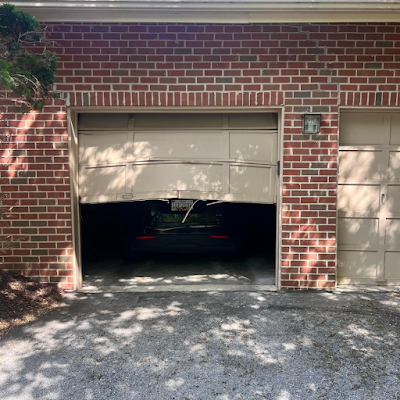
Preparing Rockville Garage Doors For Late Winter Storm Impacts
As February closes, the patterns seen across Rockville homes and businesses point to one clear takeaway—garage door systems need more than just occasional use to stay reliable through winter. Springs are showing fatigue more quickly in older systems, rollers are seizing due to a lack of cold-weather lubrication, and smart openers are struggling in low-temperature setups without proper insulation or updated firmware. These issues don’t just cause noise or delays—they can bring your door to a full stop at the worst time.
Garage systems are complex, with dozens of moving parts that rely on balance, timing, and condition. And it only takes one worn hinge or misaligned sensor to throw the whole system off. February’s cases make it clear: a bit of preventive care now keeps doors moving when it matters most.
For help diagnosing problems, adjusting systems, or preparing your garage door for March storms, contact Neighborhood Garage Door. Their Rockville-based technicians are available to inspect, service, and restore your system with the right tools and replacement parts for late winter performance.

Contact Information:
Neighborhood Garage Door Of Rockville
206 Congressional Ln #203
Rockville, MD 20852
United States
. .
(240) 940-7548
https://www.neighborhood-gds.com/
